SIP for Beginners: How a Systematic Investment Plan Actually Works
I heard the word SIP for years before I understood it. This is the explanation I wanted: what actually happens each month, how to pick an amount, how it's taxed, and which mistakes cost the most.

Ram
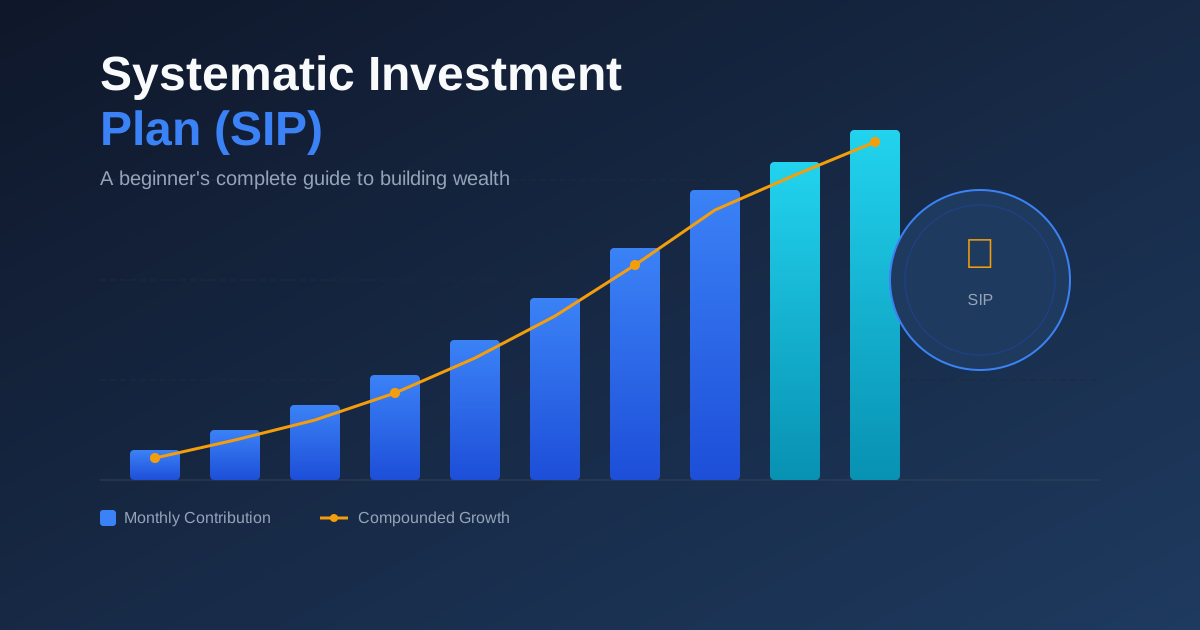
I heard "SIP" mentioned for years at work and in family conversations before I understood what it was. It sounded like a product, something you buy. It isn't. It's just a way of putting money into a mutual fund: the same amount, on the same date, every month, automatically.
That's really the whole idea. The rest of this post covers what happens when that money moves, how to decide on an amount, how the gains are taxed, and the mistakes that end up costing the most.
This is general education, not personalised financial advice. If you're making a big decision, talk to a SEBI-registered investment adviser.
What happens each month
When you set up a SIP, you sign an auto-debit mandate with your bank. On your chosen date:
- The fixed amount leaves your bank account.
- The fund buys units for you at that day's NAV (the price of one unit of the fund).
- Those units go into your folio, alongside everything you've bought before.
Since the amount stays the same but the NAV moves, you end up buying more units when the market is down and fewer when it's up. That's what people mean by rupee cost averaging. It doesn't guarantee a profit. It just removes the "is now a good time?" question, which, honestly, is the part most of us are bad at.
What it can grow to
The maths is plain compound growth, with each instalment compounding for however many months it stays invested. For a monthly SIP:
Maturity = P × [((1 + r)^n − 1) / r] × (1 + r)

P = monthly amount, r = annual return ÷ 12, n = number of months
You don't need to do this by hand. The SIP calculator does it for you. But here's one worked example to make it concrete:
₹5,000 a month for 15 years, assuming 12% a year
- You put in: ₹9,00,000
- Estimated value: about ₹25.2 lakh
- So roughly ₹16.2 lakh of that is growth.
Two caveats. First, 12% is an assumption, not a promise. Equity funds have had long stretches well above and well below it. Second, ₹25 lakh in 15 years won't buy what ₹25 lakh buys today. Run the numbers at 10% too, and see whether your plan still works.
Picking an amount: start from the goal
"How much should I invest?" is hard to answer in the abstract. "What do I need, and by when?" is easier.
This table shows roughly what ₹1,000 a month grows to. Scale it to your own number:
| Years | At 10% | At 12% | At 15% |
|---|---|---|---|
| 5 | ₹78,000 | ₹82,000 | ₹90,000 |
| 10 | ₹2.07 L | ₹2.32 L | ₹2.79 L |
| 15 | ₹4.18 L | ₹5.05 L | ₹6.77 L |
| 20 | ₹7.66 L | ₹9.99 L | ₹15.16 L |
Example: you want ₹25 lakh for something 15 years away. First adjust for inflation. At 6% a year, ₹25 lakh today is about ₹60 lakh in 15 years. At 12%, each ₹1,000/month gets you about ₹5.05 lakh, so:
₹60 L ÷ ₹5.05 L × ₹1,000 ≈ ₹11,900 a month
If you skip the inflation step, you'd aim for about ₹5,000 a month and fall well short. That's the most common planning mistake I've seen.
Two more things about amounts:
- Start with something you won't have to stop. A ₹2,000 SIP you keep for 15 years beats a ₹15,000 SIP you cancel in month eight.
- Raise it as your salary rises. A "step-up" SIP does this automatically. Increasing ₹5,000/month by 10% each year for 20 years ends up near ₹99 lakh at 12%, against about ₹50 lakh with no increases. There's more on that in the step-up SIP guide.
How SIP gains are taxed (equity funds)
The part that confused me at first: every monthly instalment is its own investment with its own holding period. When you redeem, units go out first-in, first-out.
For equity mutual funds, under the rules in effect since July 2024:
- Held more than 12 months: long-term capital gains. 12.5% on gains above ₹1.25 lakh in a financial year.
- Held 12 months or less: short-term capital gains, taxed at 20%.
So if you redeem a SIP that's been running for four years, most units are long-term. Only the last year's instalments count as short-term.
ELSS (tax-saving) funds work the same way, but each instalment is locked in for three years from its own date. Your January 2026 instalment unlocks in January 2029, not when the SIP as a whole turns three.
Tax rules change with budgets. Check the current rates before you redeem anything large.
Mistakes that cost real money
Stopping when the market falls. This is the big one. When the market is down 20–30%, your SIP is buying units cheaply. Stopping then means you skip the cheap months and keep only the expensive ones.
Regular plans instead of direct plans. Regular plans pay a distributor commission out of your returns every year. Take a ₹5,000 SIP over 20 years: at 12% it grows to about ₹50 lakh, while at 11% (a 1% annual drag) it grows to about ₹43.7 lakh. That's roughly ₹6 lakh gone, for the same fund and the same discipline. If the plan name doesn't say "Direct", check.
Too many funds. Five large-cap funds largely own the same 50 stocks. Two or three funds from different categories are plenty for most people.
Chasing last year's top fund. Last year's winner is often next year's average fund. Look at five- and ten-year rolling returns and the expense ratio instead. For a beginner, a plain Nifty 50 index fund is a hard default to beat.
Using equity for short goals. Equity funds can fall 30–40% and take years to recover. For money you need within three years, a debt or liquid fund is the safer place.
Checking every week. A three-month-old SIP's return tells you nothing. Look once or twice a year.
SIP or lump sum?
If you earn a salary and don't have a large amount sitting idle, this isn't really a choice: SIP is how you invest from monthly income.
Lump sum only comes up when you get a bonus or a windfall. Historically, investing it all at once has done better more often than not, because markets rise more often than they fall. But it feels terrible if a crash comes the month after. A middle path many people use is to park the money in a liquid fund and move it into equity over 6–12 months with a Systematic Transfer Plan (STP). The SIP vs lump sum comparison goes through the numbers.
Starting one
- Finish KYC with your PAN and Aadhaar. Most apps do this in a few minutes.
- Pick a platform that sells direct plans, such as Zerodha Coin, Groww or Kuvera, or go straight to the fund house's website.
- Pick the fund. If you're unsure, start with one broad index fund. The guide on how to choose a mutual fund goes further.
- Choose a date a few days after your salary arrives, so the debit never bounces.
- Then leave it alone.
Once you've been investing for a while and start thinking about drawing the money out, the SWP guide covers the other side.